Posts

Showing posts with the label Technology

Why is Paytm India's Top Startup?

Image
Paytm was launched in 2010 as an Indian start up. The original service of Paytm was to help users to make their bill payments and recharge mobile phones, while earning reward point. In this post we will see the reason why Paytm is considerd the top indian startup and get more details about this startup. What is Paytm? Paytm was founded by Vijay Shekhar Sharma, in Noida with an initial investment of $2 million. Paytm's parent company One97 Communications which is also owned by Vijay Shekhar Sharma was started in 2000 and operates into multiple fields. Who owns Paytm? Paytm has been backed by Jack Maa's Alibaba and Ratan Tata of the infamous TATA Group. Although partially owned by Chinese company Alibaba, Paytm remains an Indian company with majority of stake holders being Indians (primarily Ratan Tata and Vijay Shekhar Sharma himself.  What got Paytm the required boost? Paytm added a lot of features in 2013 and moved from a mobile and DTH recharge service to an online payment pl...

Simplicity Vs Complexity

Image
Advantages of simplicity to larger companies The demand for simplicity is growing in many parts of the world and there are reasons why a large firm may also benefit by being simple. Some of the benefits are mentioned below: Customers are demanding simplicity: Any company, be it a large MNC or a local store has to provide what the consumers demand. The customers are now demanding simple products that serve the purpose. 65 percent of Americans complain that they are overwhelmed with the technology driven complex products. Change in the lifestyle of consumers: More and more people around the world are downshifting their lifestyles. Some are doing it by choice some unwillingly. This change in lifestyle makes it important for the large companies to give simple solution to keep serving this audience. Over-engineered products cost a lot of R&D and time: In a time of scarcity, companies can no longer afford to invest lavishly in R&D to come up with complex products. S...

Keep it Simple

Image
This article brings us to the 4th Principle that is, Keep it simple. Dr. Sathya Jeganathan is a pediatrician in Chengalpattu Government Medical College, a rural hospital in South India. She was getting troubled by the low mortality rate of the infants in her hospital. Of each 1000 babies that were born, 39 died in the first four weeks of life. The case was similar across the entire country. Roughly 2.6 crore children were born each year. Out of which 12 lakh died during the 1st month of their birth. The solution was in the west in form of incubators. She tried to import few for her hospital, but the setup itself coasted her lot of money, had high maintenance cost and it required a well trained staff to operate. It was a solution, but for the rich west only. It could not be implemented in the rural India. Undeterred, she tried to do some Jugaad thinking. She decided to design her own incubator, one that was simple, inexpensive and easy to use. She teamed up with neonatal nurses an...

What Makes Large Firms So Inflexible?

Image
Being flexible and coming up with new business models is increasingly critical for firms. However, many companies continue to operate their businesses in the ways they had been operated till now.  There are mainly 5 reasons why it is difficult for a large firm to adapt the flexibility model. There reasons are given below and explained. Complacency According to Carol Dweck, a professor of psychology at Stanford University, individuals typically have one of two mindsets: A fixed Mindset – They believe their qualities and other’s are carved in stone A Growth Mindset – They believe that their basic qualities can be nurtured and improved through efforts. Shashank Samant, President of GlobalLogic, a company that provide R&D services to large technology vendors was invited by a large firm to redesign their 15 year old product. Samant and the team at GlobalLogic made a simple but efficient design keeping in mind the audience that prefers using Google and Facebook. The...

For Most Large Companies, Bigger is Still Better

Image
In the new era of scarcity, large companies must learn how to produce higher value with fewer resources. Despite the benefits of doing more with less, large companies face significant obstacles in adopting this approach. Some of the major reasons are mentioned below. Mindset (Top Management) The top management is in many large companies are wedded to a previously successful ‘more for more’ strategy. However this ‘bigger is better’ approach is no longer sustainable as large companies face an increasing resource crunch and a growing number of aspirational but relatively low-income consumers seeking value-for-money offerings. Low cost would ideally mean low income and that in return will mean low profits. They typically think that each unit sold for Rs.100 will yield them a profit of Rs.10 and if this unit is sold at Rs.80 they will earn a profit of Rs.8. Instantly reducing the profits by Rs.2 per unit. They fail to understand that the consumer is no more ready to pay Rs.100 for t...

Realize Extreme Conditions are Fertile Soil for Extreme Innovation

Image
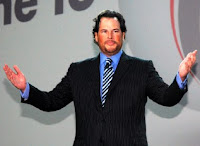
Jugaad Innovators seek for adverse conditions to unleash their Jugaad skills. The more extreme condition calls for more extreme innovations. Corporate leaders should view extreme conditions such as massive technology shifts, change in regulations, or competitive threats that come out of blue as an opportunity to develop radical innovations that disrupt industries and shape whole new markets. Marc Benioff, Chairman & CEO of salesforce.com, is one such innovator. In the year 1999, he founded salesforce.com in his San Francisco apartment with bold vision. He wanted to make business software which enterprises use to manage their customer interactions affordable and accessible to more companies. The business model was pay as you go and it could be accessed by the browser itself. The software was not installed in the employees’ PCs thus avoiding the expensive license fees and maintenance costs charged by large software vendors like Oracle, Siebel and SAP. In 2001, when salesforce.c...