Posts

Showing posts with the label Jugaad Innovations

Why is Paytm India's Top Startup?

Image
Paytm was launched in 2010 as an Indian start up. The original service of Paytm was to help users to make their bill payments and recharge mobile phones, while earning reward point. In this post we will see the reason why Paytm is considerd the top indian startup and get more details about this startup. What is Paytm? Paytm was founded by Vijay Shekhar Sharma, in Noida with an initial investment of $2 million. Paytm's parent company One97 Communications which is also owned by Vijay Shekhar Sharma was started in 2000 and operates into multiple fields. Who owns Paytm? Paytm has been backed by Jack Maa's Alibaba and Ratan Tata of the infamous TATA Group. Although partially owned by Chinese company Alibaba, Paytm remains an Indian company with majority of stake holders being Indians (primarily Ratan Tata and Vijay Shekhar Sharma himself.  What got Paytm the required boost? Paytm added a lot of features in 2013 and moved from a mobile and DTH recharge service to an online payment pl...

How jugaad helped solve bridge problem

In October 2011, as Western Railway raced towards its goal of converting its entire network between Churchgate to Virar to AC, engineers encountered immovable obstacles: bridges. There are nearly 10 bridges on the route, and engineers realised that their height would have to be increased to create adequate gap between the structures and tracks for a “safe jump” from 1,500 volt DC to 25,000 volt AC. The 2,500-tonne Sandhurst bridge between Charni Road and Grant Road was particularly a steep challenge. “We needed to raise its height by 32 centimetres. But we realised that even a mistake of 1 centimetre would lead to a collapse,” the official said. “It was the kind of an operation where failure was just not an option.” To avoid the risk of bringing down one of Mumbai’s busiest road links, Western Railway wrote to the ministry, and secured permission to simply lower the level of tracks under the bridge. The same clever improvisation was used for other bridges during the current co...

Jugaad Mumbai local

Railway engineers have walled off some doors of a train to create room for extra electric motors - a clever and cost-effective improvisation that has helped boost the train’s power. As people walked towards a slow local for Borivali on Churchgate’s platform number one on Tuesday afternoon, they grappled with a never-seen-before oddity: almost every second coach of the train had only two sets of doors instead of the usual three. While many commuters dismissed the anomaly as a new coach design, it was the result of Mumbai’s famed concept of jugaad. Railway engineers have walled off the doors, also referred to as gangways, to create room for extra electric motors - a clever and cost-effective improvisation that has helped boost the train’s power. So now, the sealed areas of coaches 2, 5, 8 and 11 look like pantry cars of a Rajdhani from the outside. Over the years, similar tweaks (or acts of jugaad) have become a central feature of the city’s suburban train network. One of the mo...

The Art of Simplicity

Image
Jugaad Innovators are not in the business of coming up with cool features that appeal to customers’ wants, rather Jugaad innovators aim to make and deliver a good enough solution with limited functionality rather than one with a dazzling array of features. More pics here For instance, to address the high cost of electricity in Filipino slums, Illac Diaz invented the Isang Litrong Liwanag which literally means “A Liter of Light”. He made the eco-friendly solar bottle bulb. The solar bottle bulb (commonly known as SLB) is simply a recycled plastic bottle filled with bleach-treated water. The bottle is then fitted snugly into a hole in the corrugated roof of makeshift homes in shanty towns. A SLB produces more light than a conventional window might let in and it has no running cost or maintenance cost to it. Diaz’s invention is a simple invention which serves the purpose. Nokia employs ethographers who spends long period of time living with their target audience and understa...

Jugaad Innovators Adapt to Survive

Image
In times like these it is very important for a company to initially survive and then grow. Jugaad Innovators know this fact very well and act accordingly. There are four crucial ways in which they think and act flexibly in response to the environment they face. Think the Unthinkable Harish Hande dared to think the unthinkable and succeeded. Hande founded India’s Solar Electric Light Company (SELCO) in 1995. He started his business with very little seed money, as conservative banks were not ready to invest in an unproven business model in an unknown industry. He started with investing his own money, Rs. 1500 to be specific. However he soon hit the wall, he soon learnt that many of his potential consumers earn less than Rs. 50 a day and could not afford an upfront payment that was required. Even if these systems somehow got installed, there was no economic way for him to maintain them for rural consumers scattered across multiple villages. To overcome these twin problems, ...

Consistantly spend time over your Dream Project

Image
Founded in 1902, 3M has come to epitomize American ingenuity. Over the course of a century, its prolific inventors have churned out breakthrough products that have become part of Americana. From Scotch Tape to Scotchguard Protector and Thinsulate Insulation to the omnipresent Post-it Notes. What made 3M so innovative is the reason being, 3M set itself a goal of generating 30% of its total revenues from new products it had introduced in the preceding five years. This bold goal is known as the New Product Vitality Index (NPVI) within 3M. This helps the company to constantly invent and reinvent products.  The 3M culture helps create and cultivate new ideas. To be one of the most innovative companies in the world it has launched one of the most radical initiatives – the 15% program for its staff. This program allows 3M employees to use 15% of their paid work time to pursue their dream projects. 3M is also very supportive towards its employees with their projects. Some o...

Your competition can buy your technology but not the resilient mindset of your Employees

Image
Corporate leaders cannot build a resilient organization without a resilient workforce. Fred Luthans, professor of Organizational Behavior at University of Nebraska says “The true value of a company is no longer the tangible assets or even its technological processes. It lies in the human capital and underlying psychological capital. Anyone can buy your technology or obtain money from financial markets, but cannot buy employee motivation, engagement, confidence, resiliency, hope and optimism. Franck Riboud is one such leader who wants to boost his firm’s psychological capital. Riboud is the CEO of Danone, a French multinational that is one of the world’s largest suppliers of dairy products and bottled waters. In India, Danone is known in the North markets for its yogurt and lassi products. Danone is the company to launch Yakult the probiotic drink in India. Riboud believes that his 92 year old company is facing 2 major challenges, 1. Consumers around the world are looking for afford...

Realize Extreme Conditions are Fertile Soil for Extreme Innovation

Image
Jugaad Innovators seek for adverse conditions to unleash their Jugaad skills. The more extreme condition calls for more extreme innovations. Corporate leaders should view extreme conditions such as massive technology shifts, change in regulations, or competitive threats that come out of blue as an opportunity to develop radical innovations that disrupt industries and shape whole new markets. Marc Benioff, Chairman & CEO of salesforce.com, is one such innovator. In the year 1999, he founded salesforce.com in his San Francisco apartment with bold vision. He wanted to make business software which enterprises use to manage their customer interactions affordable and accessible to more companies. The business model was pay as you go and it could be accessed by the browser itself. The software was not installed in the employees’ PCs thus avoiding the expensive license fees and maintenance costs charged by large software vendors like Oracle, Siebel and SAP. In 2001, when salesforce.c...

Recognize that the glass is always Half Full

Image
Corporate leaders can learn from Jugaad Innovators how to turn adversity into advantage and get it to work in their favour. Rather than getting frighten about an upcoming problem, corporate leaders should use the change to work for them and not against them. According to author of “Better Under Pressure” Justin Menkes, when facing crises and challenges, leaders must cultivate a sense of equanimity and demonstrate ‘realistic optimism’. Most of the CEOs these days are afraid of the growing popularity of the social media today. It gives a lot of power in hands of the common man which is not comfortable for big brands. They fret about how social media tools, when placed in the wrong hands, can be used to spread false rumours, damage a brand name, and ruin corporate and personal reputations within hours. Rather than fearing from this companies like Procter & Gamble demonstrated how voice of the masses can be used for research and development. In the past, when developing new produ...

Never give up

Image
Jugaad Innovators are often faced with criticism when they share their ideas with the world. By nature most of the humans are resistant to change. When an idea is brought to them, the first reaction of most of the people would be negative. It is the Jugaad Innovator’s job to stay focus and never give up. This quality was demonstrated very well by Enrique Gomez Junco, a Mexican engineer turned Jugaad entrepreneur. Junco was driven by a vision to create a sustainable energy business. In 1988 he set up a company called Celsol to sell thermosolar panels to Mexican businesses. But he found it hard to break the market. Market was dominated by monopolies, and he found difficult to find capital for Celsol. Rather than getting disappointed by this, Junco shut Celsol and started a new venture, Optima Energia in 2000. His plan was to sell effective energy solutions to buildings that used a lot of energy. But Optima’s value proposition did not impress the facility managers. It required a larg...

3 ways to Seek Opportunity in Adversity

Image
Jugaad Innovators find opportunity in adversity in 3 different ways 1. Re framing or changing the lens through which they perceive the situation they face. 2. Making constraints work for them rather than against them 3. Being quick to act in response to the opportunities they see We saw in the previous post how O.P. Bhatt (former chairman of SBI) used the first way to do the most with what he had and brought the Parivartan. He looked at the same situation with a different angle to make the most with the current situation and the given resources. We also saw in a previous post how Kanak Das used the second way to make the constraints work for him rather than working against him. Das used to ride his bicycle to work and faced a lot of bumpy roads on the way. Being frustrated with his situation he modified his bike to collect energy every time the front tyre hit the pot holes. This energy is then used to power the rear tyre and accelerate the bike. Professor Anil Gupta of IIM ...

Seek Opportunity in Adversity

Image
In late 80s, Tulsi Tanti a young entrepreneur moved to Surat with dreams to start his own textile unit. Like other entrepreneurs in India, Tanti faced a lot of infrastructural bottlenecks. The biggest problem was the power supply, which also accounted for 40% to 50% of the operating cost. Electricity was expensive and unpredictable. All other means of fuel were even more expensive. With a profit margin of 5% he could not afford it. Instead of giving up and accepting whatever he has, he decided to experiment with various boilers and generators. But he soon realized that all of them might give him a better result but they all required some sort of fuel. He though why not find a solution to the fuel itself. This launched him into a search for an alternative source of power that was both reliable and sustainable. In 1990, he invested in two wind turbines to supply electricity to his textile unit. It soon became clear that this was the solution he had been looking for. After the initial...

The Six Principles of Jugaad

Image
Jugaad is not restricted to India. Countries with similar economies and circumstances give rise to Jugaad Innovators. The BRIC countries (Brazil, Russia, India and China) are the epicenter of Jugaad Innovations. Due to the Jugaad way of thinking in these countries, even at the time of global recession, India and China were growing at 7% and 9% respectively. The very fact that BRIC nations have been grappling with complexity and instability for so long seems to give them an edge and a kind of immunity in volatile and adverse circumstances. What all these countries have in common is the way of thinking, the Jugaad way of thinking. By understanding various case studies and innovators, the 6 Principles of Jugaad have been derived. Seek opportunity in adversity Do more with less Think and act flexible Keep it simple Include the margin Follow your heart Together these 6 principles of jugaad help drive resilience, frugality, adaptability, simplicity, inclusivity, empathy and passion...

Jugaad in the Wild Wild West

Image
Although Jugaad is practiced in India, it was once a big part of Western innovation too. Among the many early American jugaad innovators, the best known was Benjamin Franklin. Born in Boston, Massachusetts, USA, in 1706 had left his school when he was 10 to work in his father’s soap and candle factory. Early on, Franklin developed a knack for using limited resources to devise ingenious and frugal solutions to tackle everyday problems. Franklin’s one of the most practical inventions was the Franklin Stove. During the 18 th century, homes in the US were primarily heated by inefficient fireplaces that spewed smoke as much of the heat they generated escaped up the chimney. This was also dangerous as the sparks could easily trigger fires to the wood build homes. Franklin’s jugaad innovation was a new type of stove with a simple hooded enclosure in the front and an air box in the rear. The new stove and its reconfiguration of the flues enabled a more efficient fire. It consume...

What is Jugaad?

Image
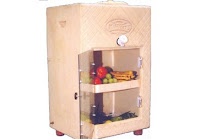
A potter named Mansukh Prajapati who stays in a remote village called Ramkrishna Nagar of Kutch, Gujarat has transformed his weaknesses into an invention. He stays in a desert city which does not have enough electricity and a certain deficit of water. Using his years of experience of being a potter, Mr. Prajapati was able to make a refrigerator out of terracotta which does not require electricity and costs only Rs. 2000. It is called “Mitti Cool”. All it requires for Mitti Cool it to pour drinking water from the top and it keeps the water as well as the contents of the refrigerator cool. After initial orders Prajapati started mass producing Mitti Cool. He taught local women how to make it and hired them to work in his factory. Mitti Cool is an idea born out of adverse circumstances, shows how a resilient mindset can transform scarcity into opportunity. Today Mitti Cool is used across the country and exported as well. Get more details on www.mitticool.in. Prajapati and his invent...